
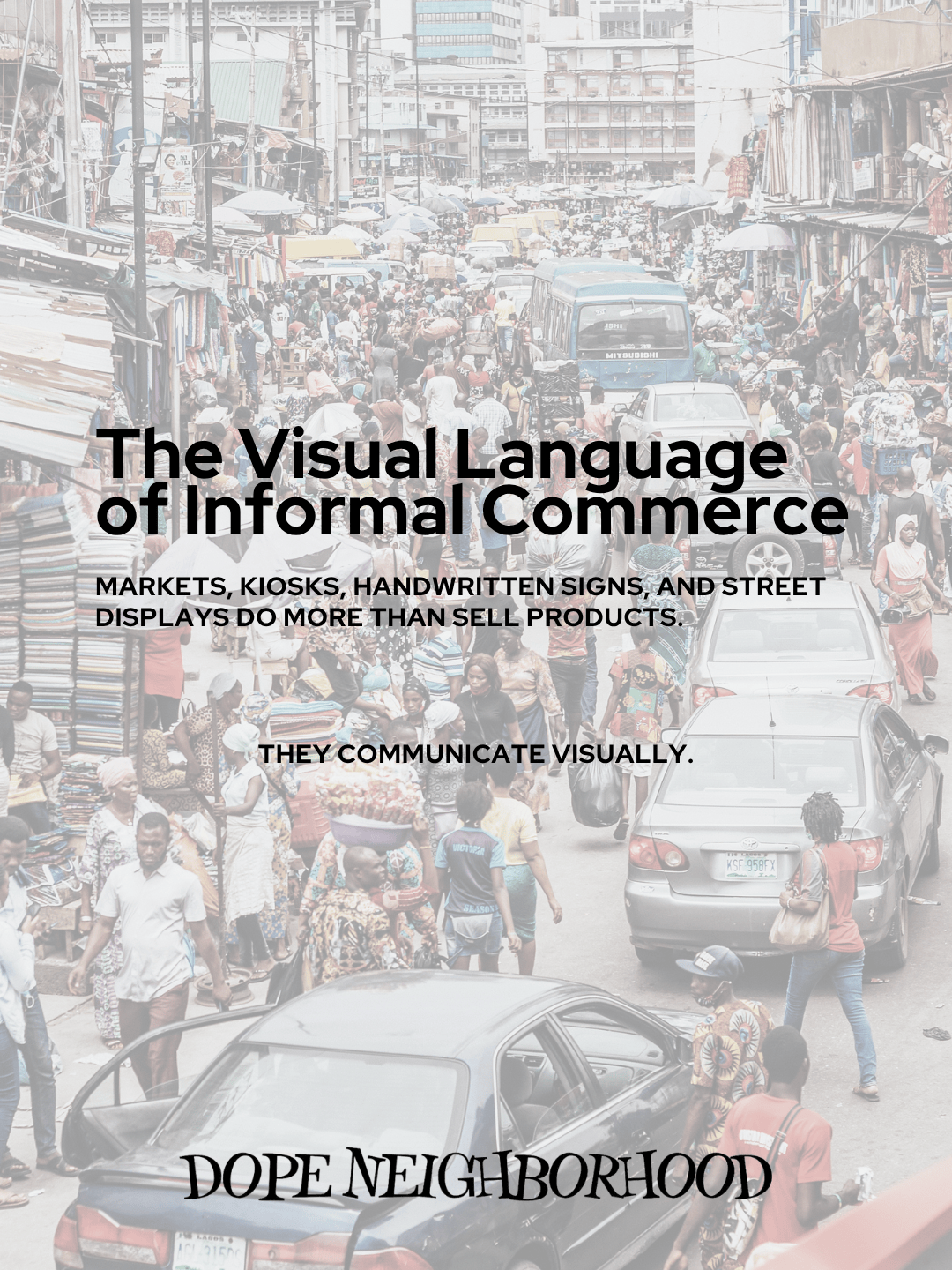
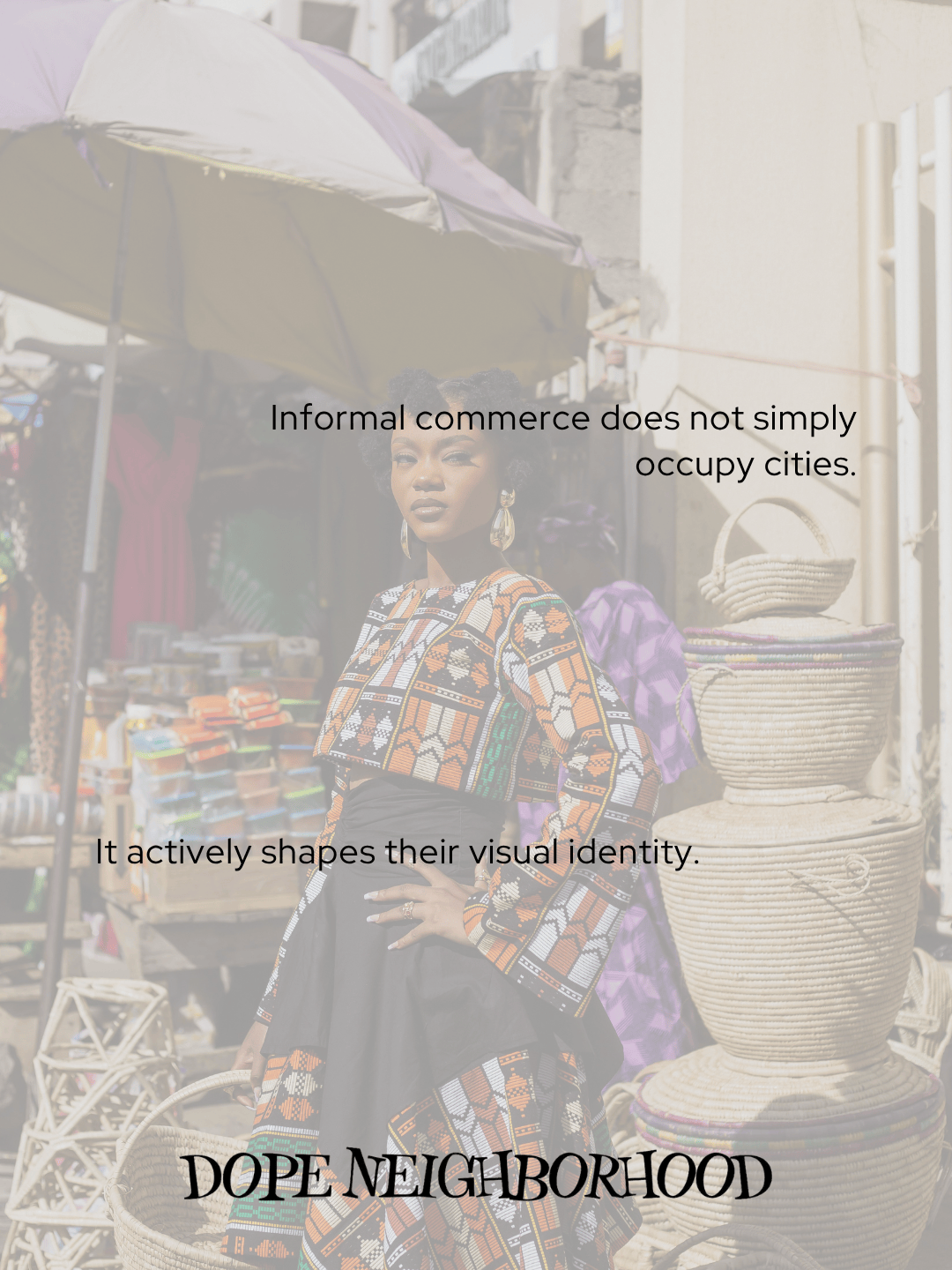
Informal commerce shapes cities in ways that often go unnoticed.
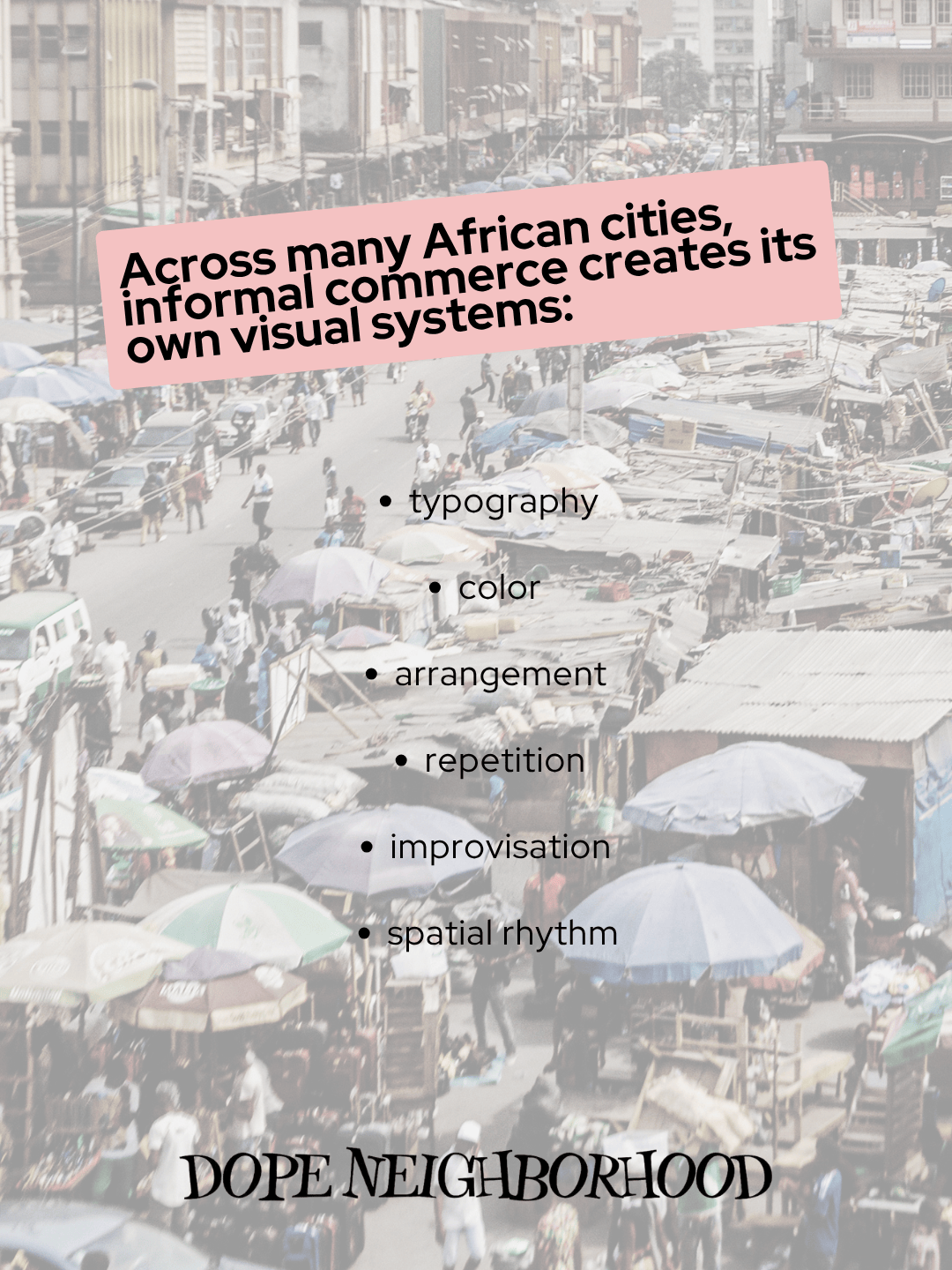
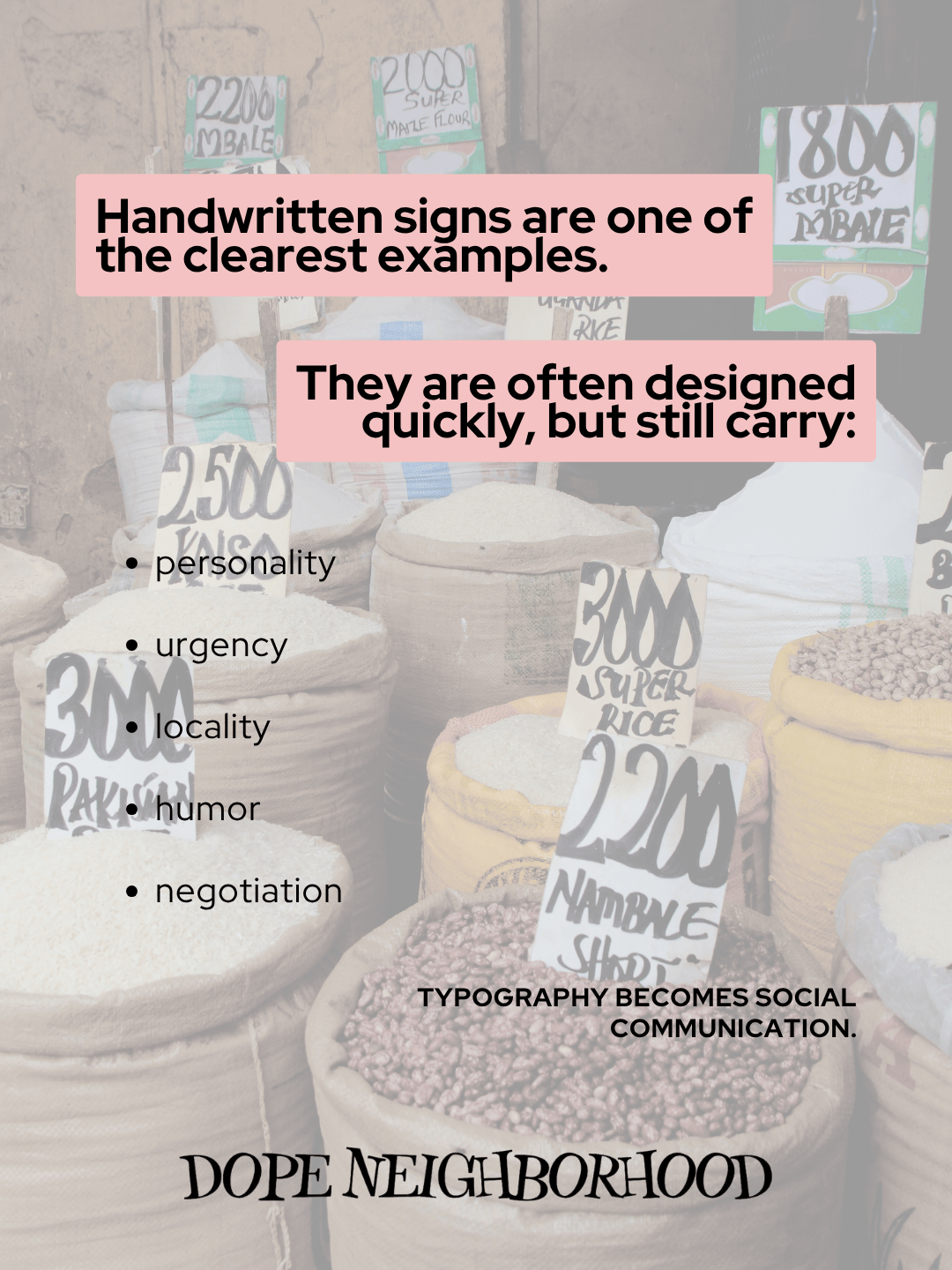
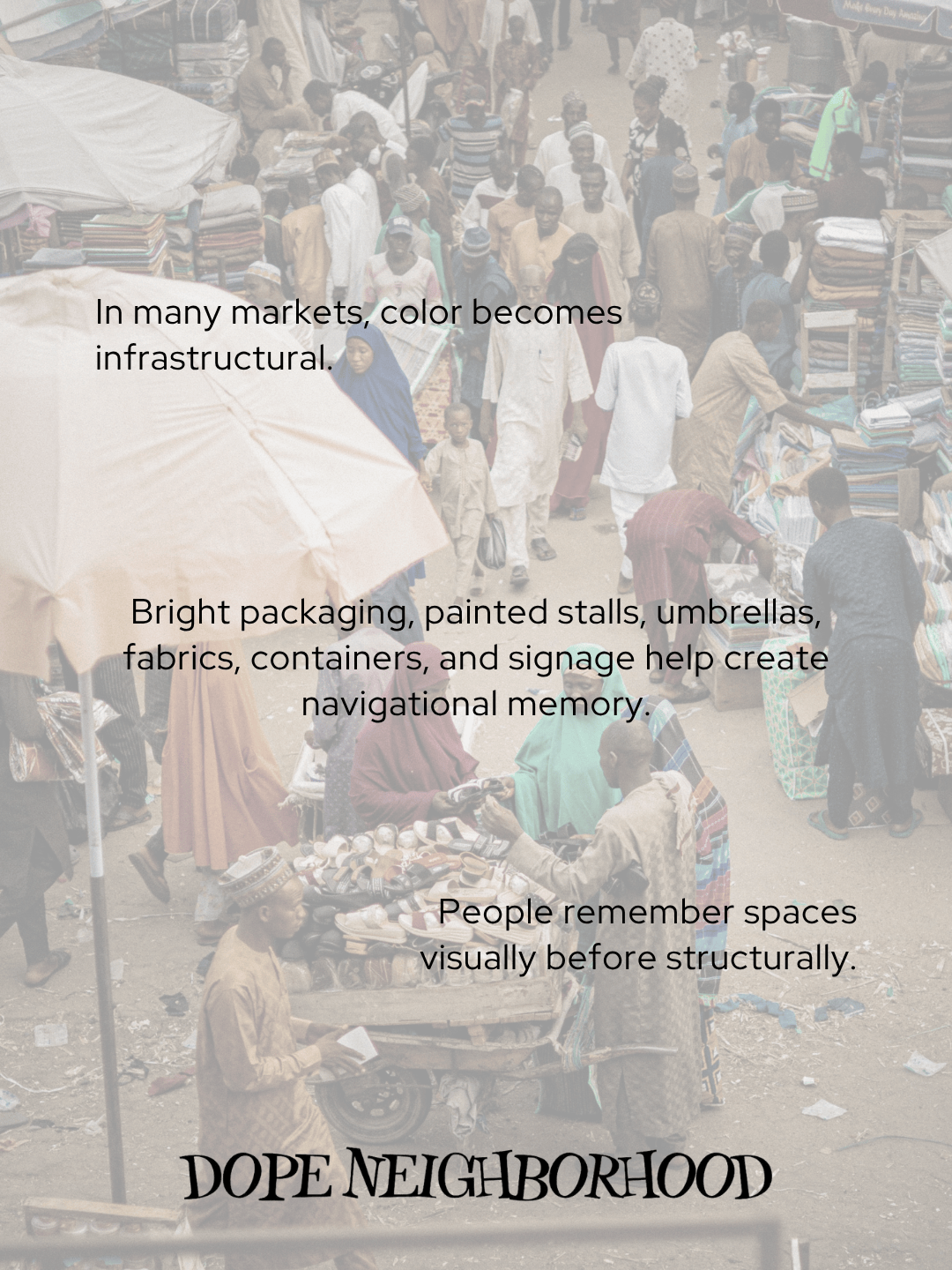
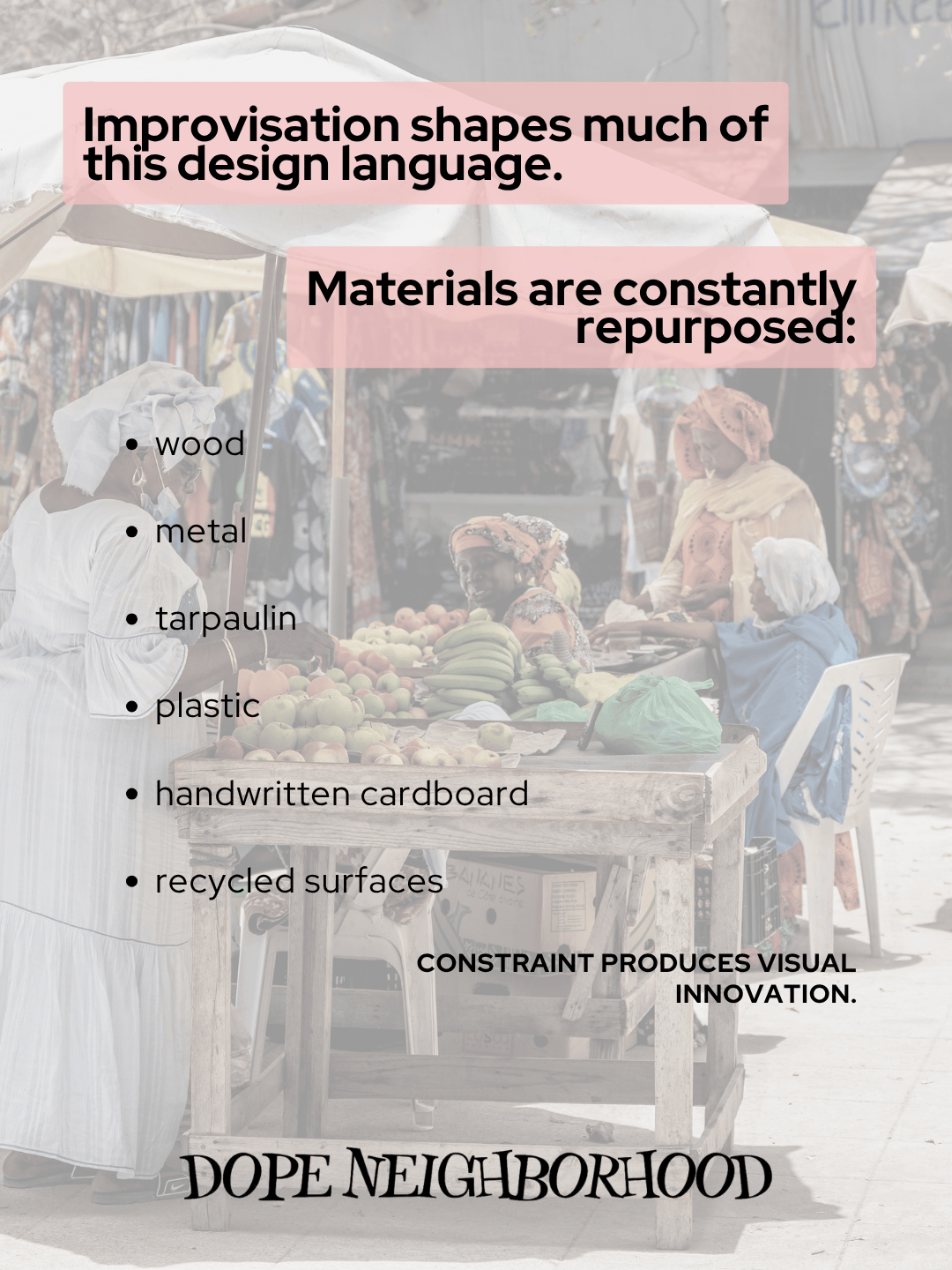
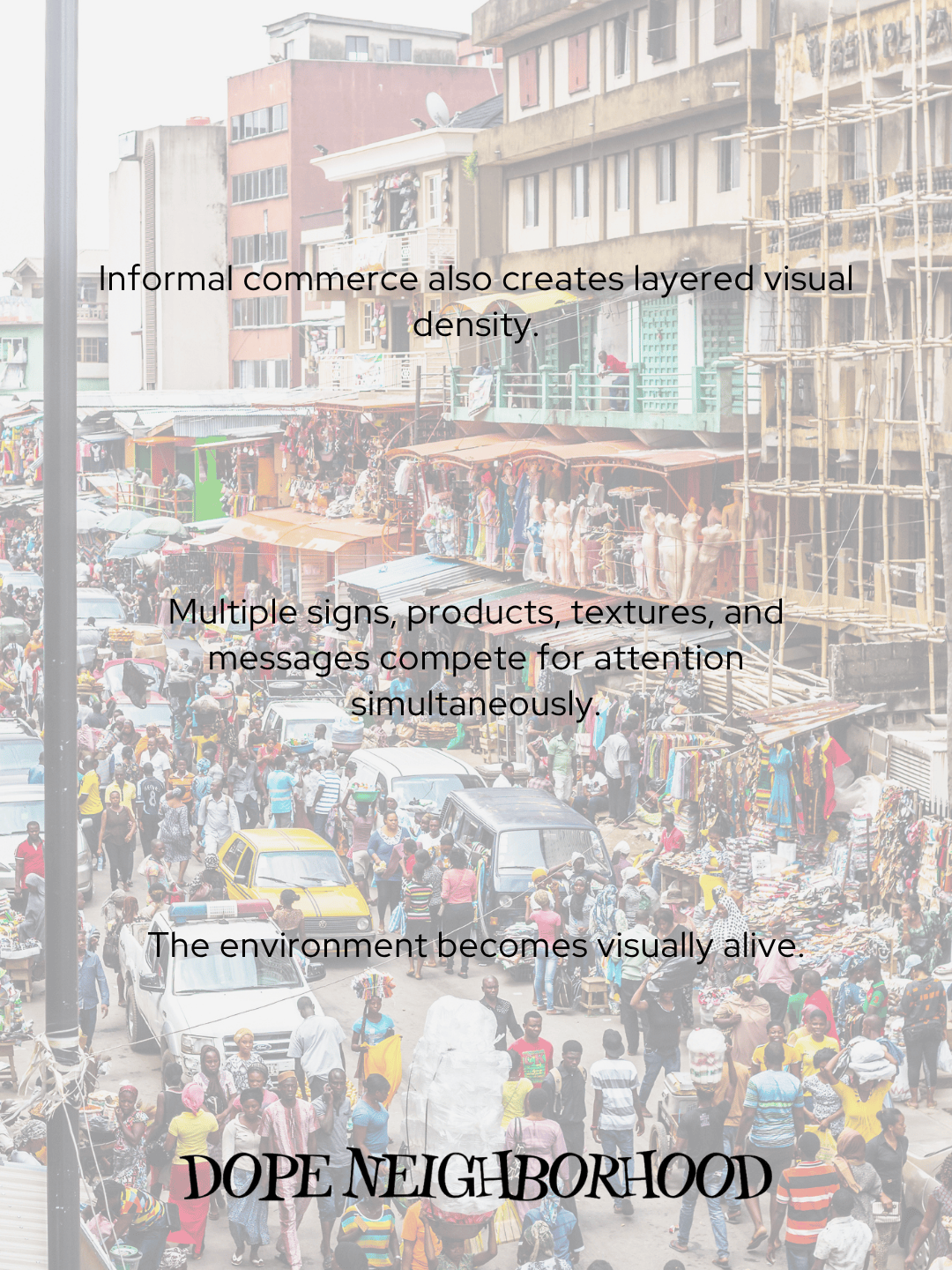
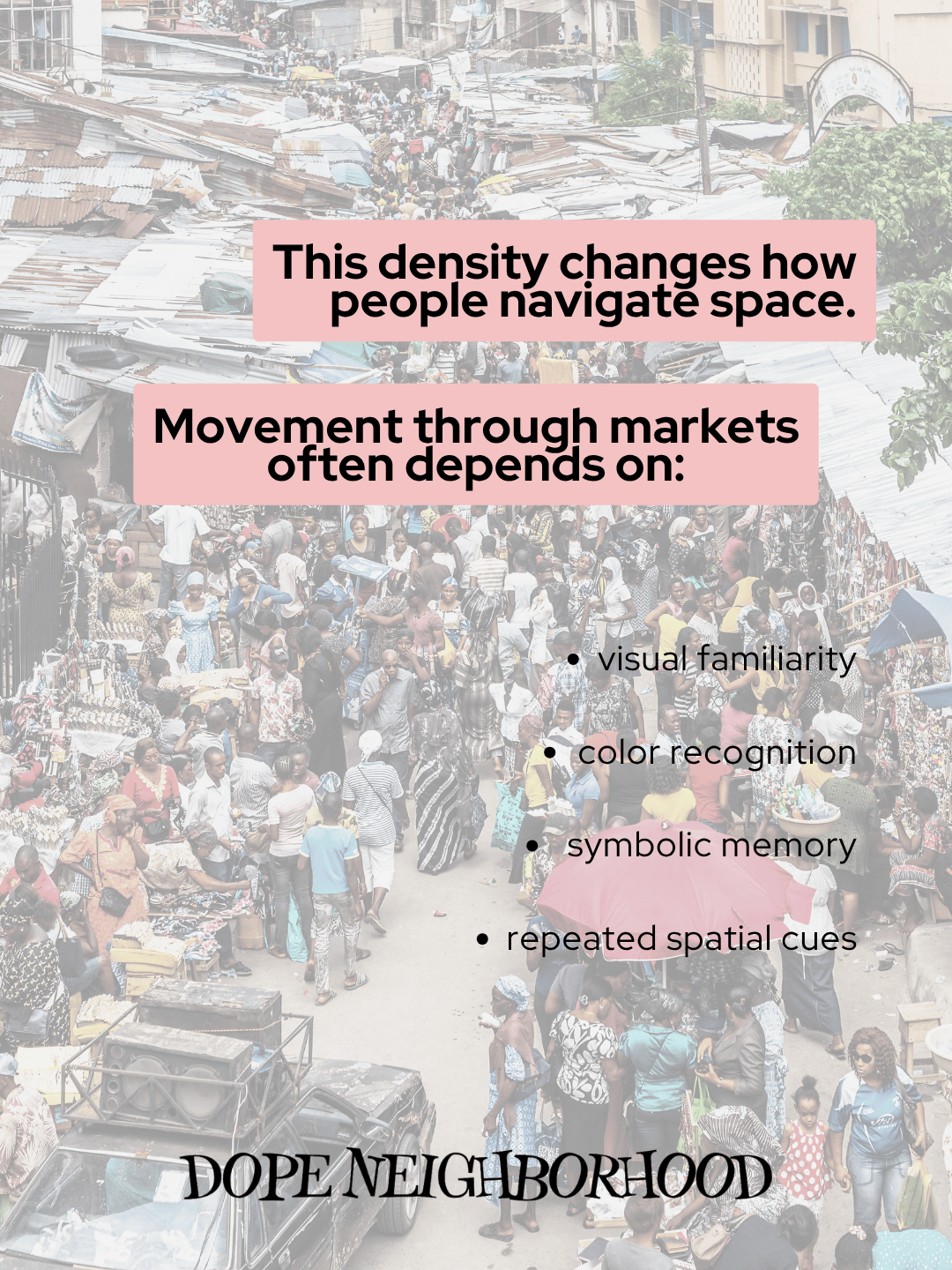
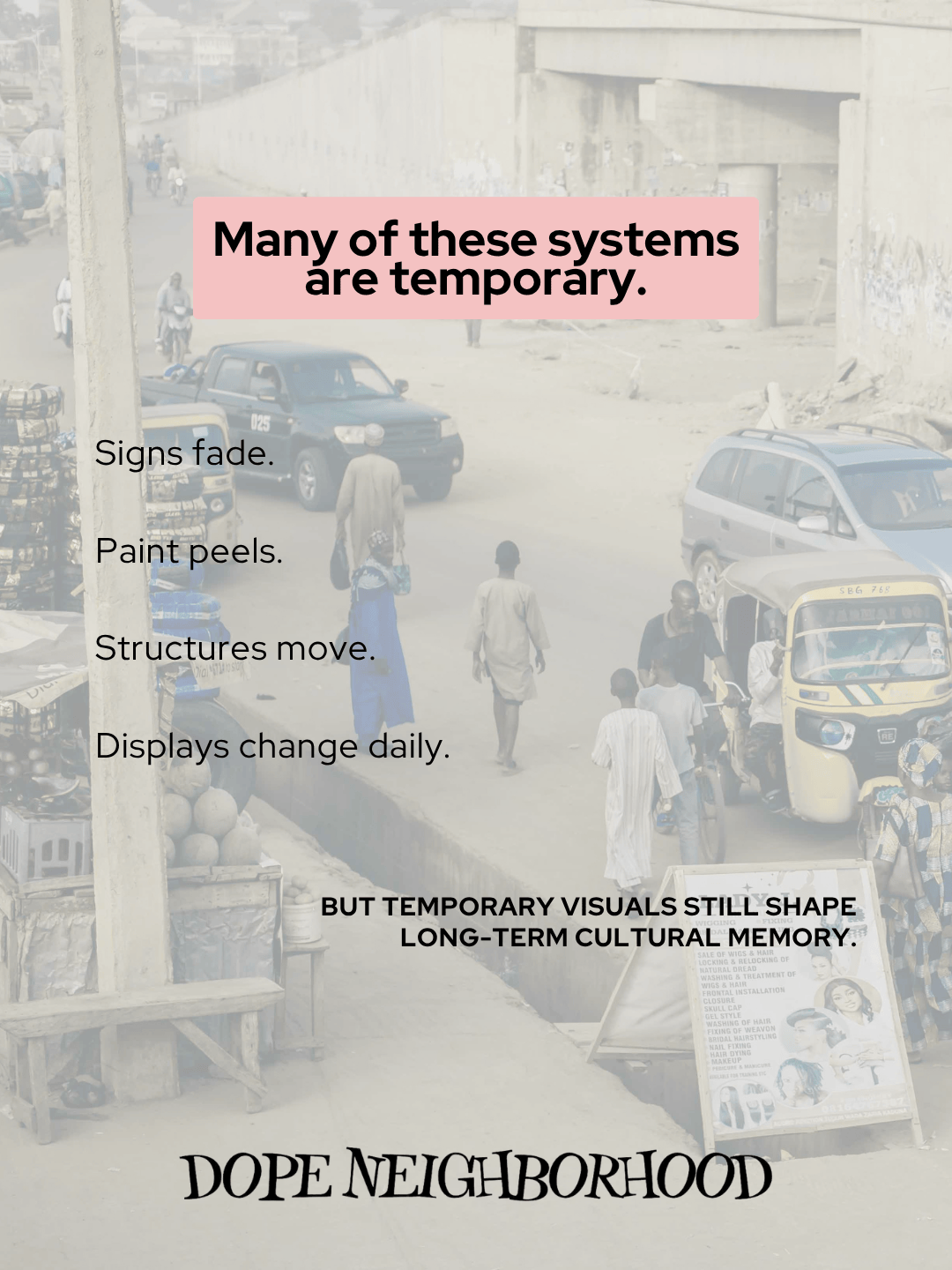
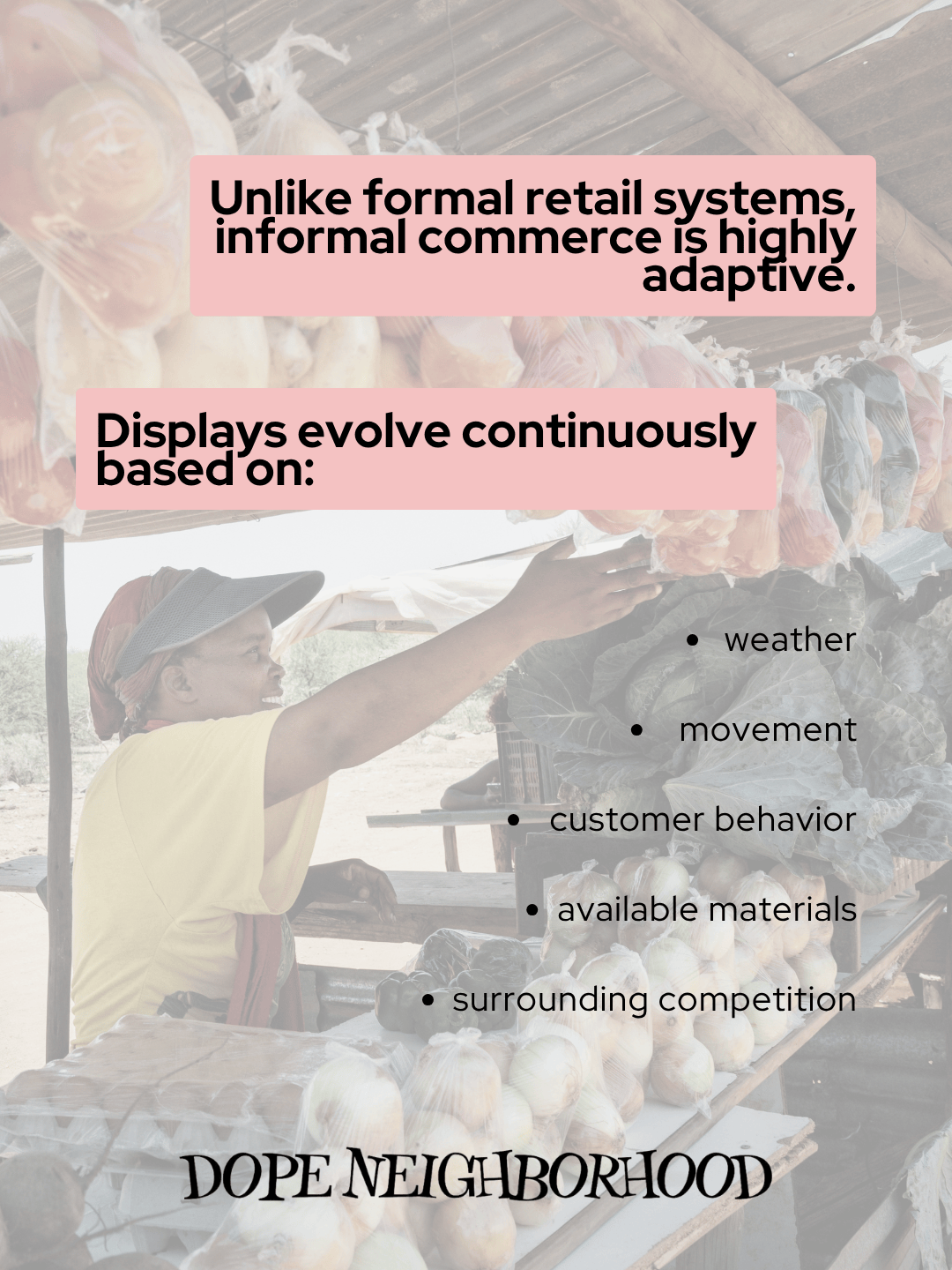
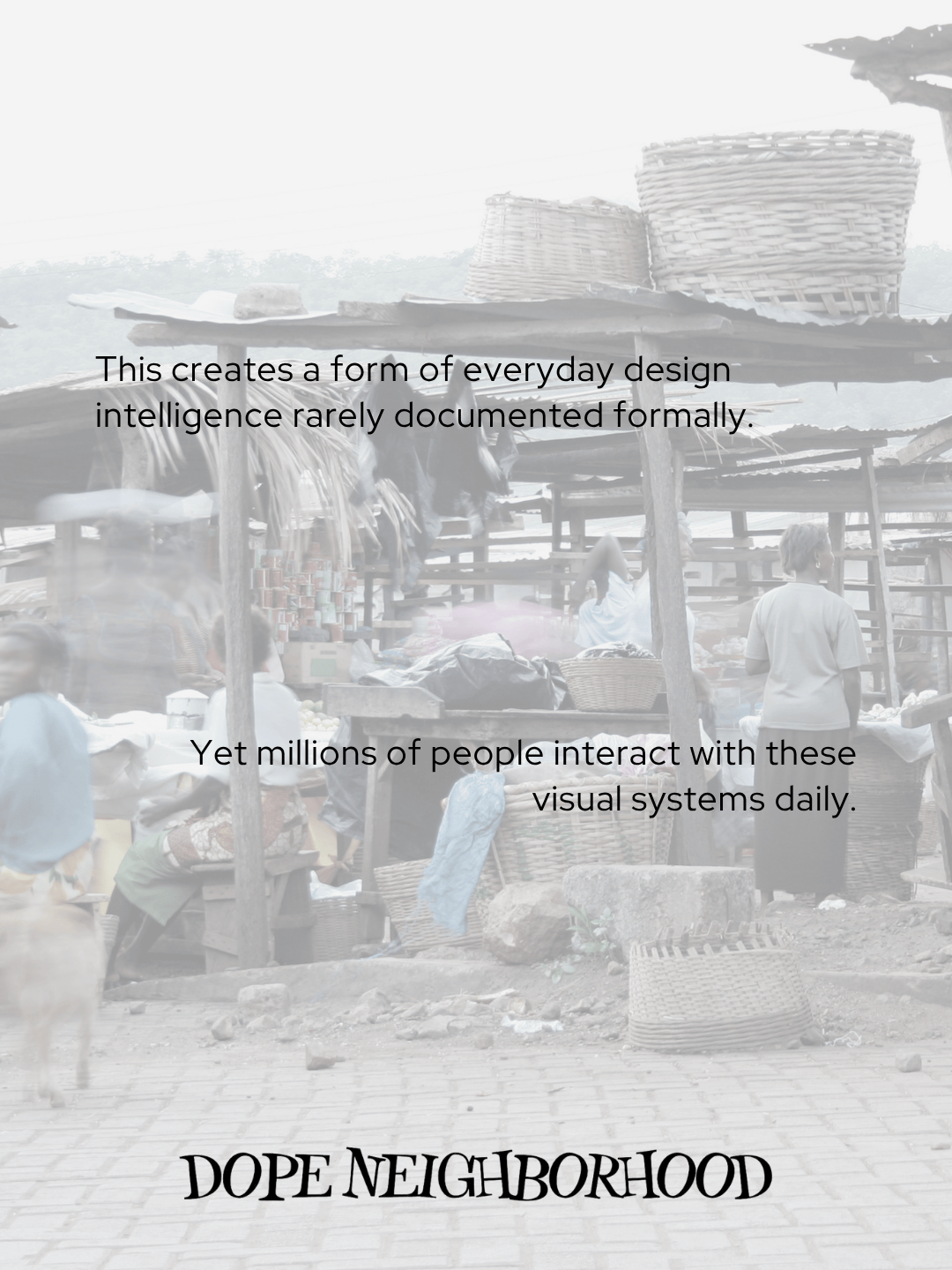
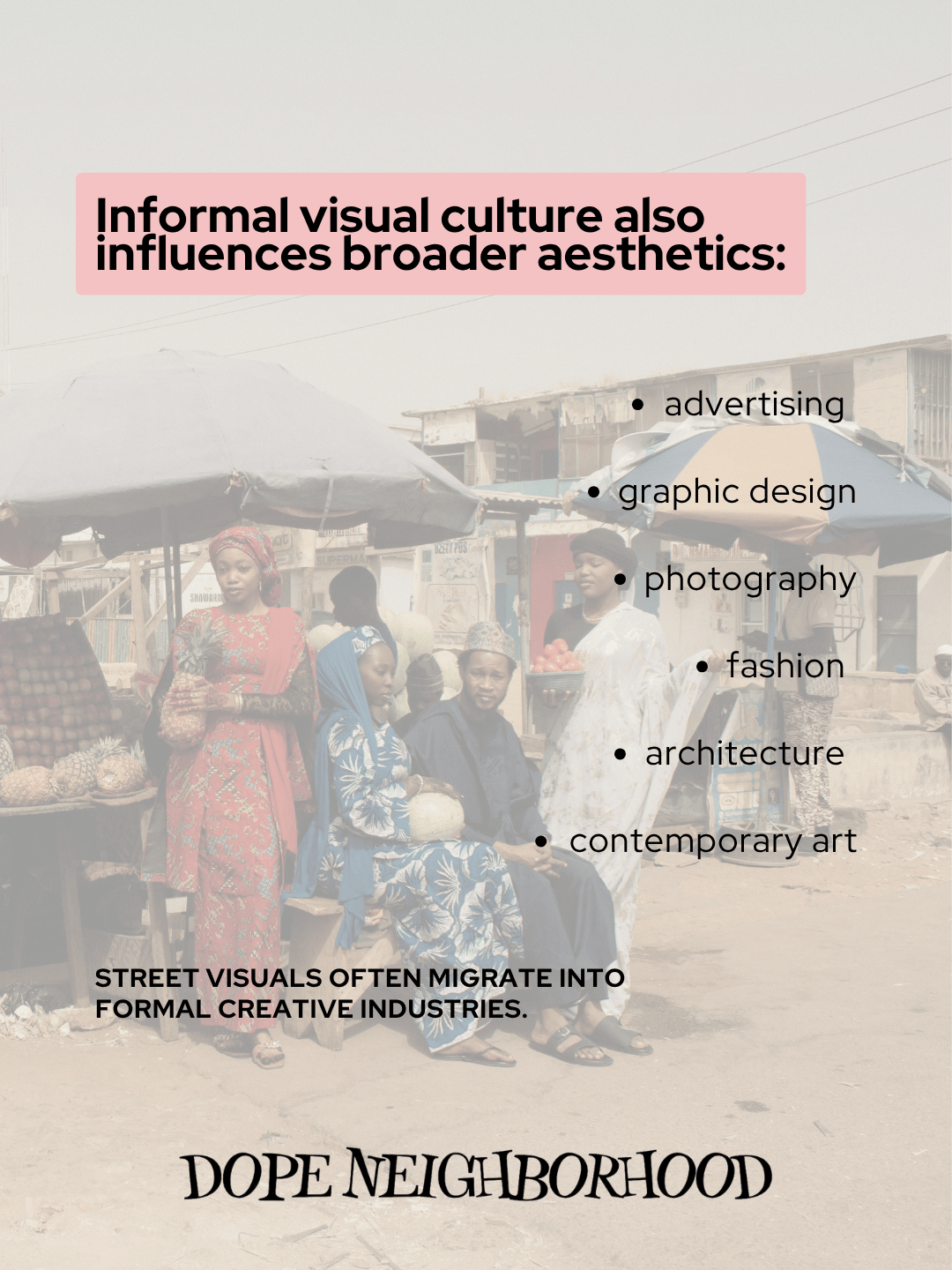
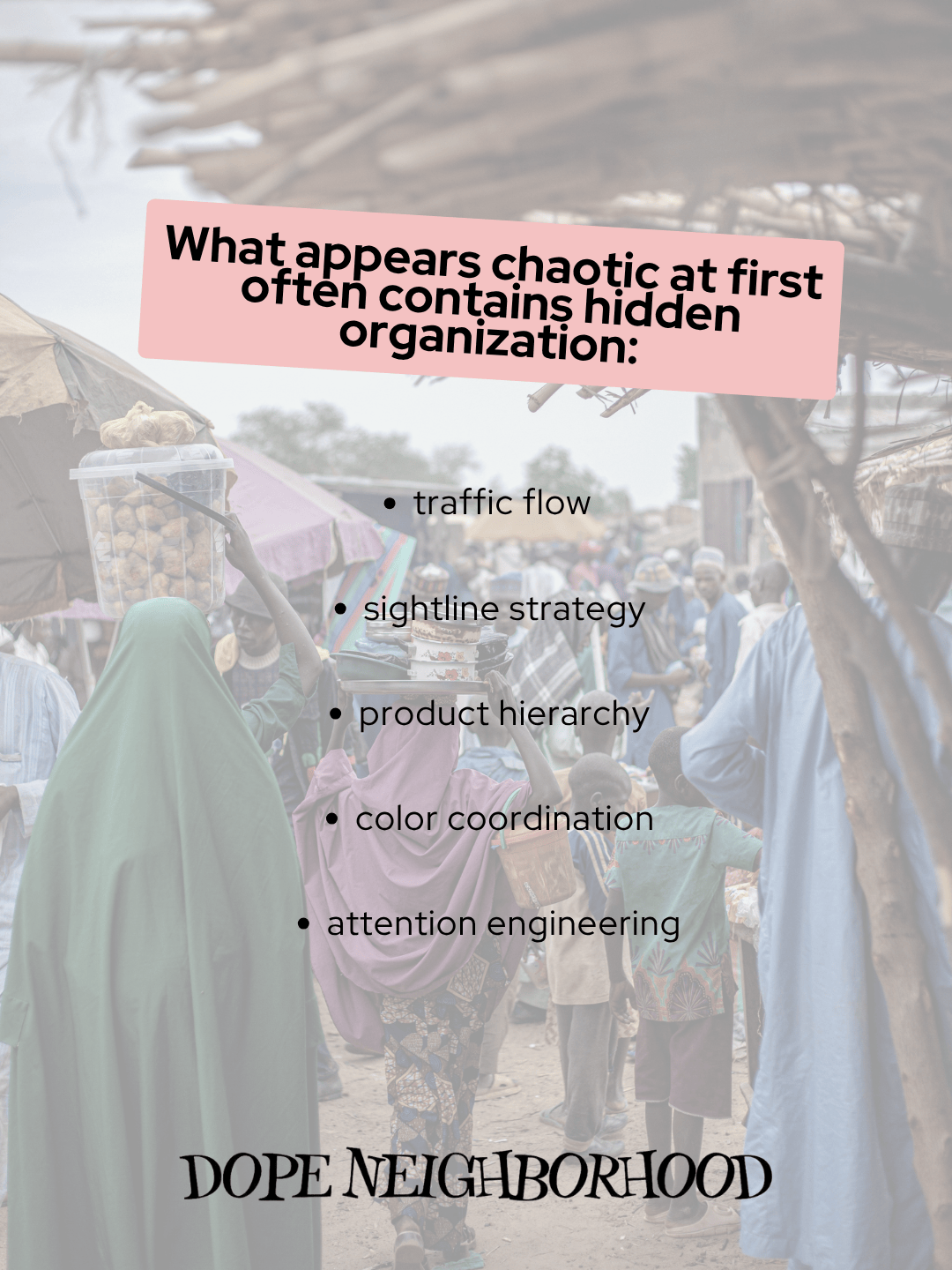
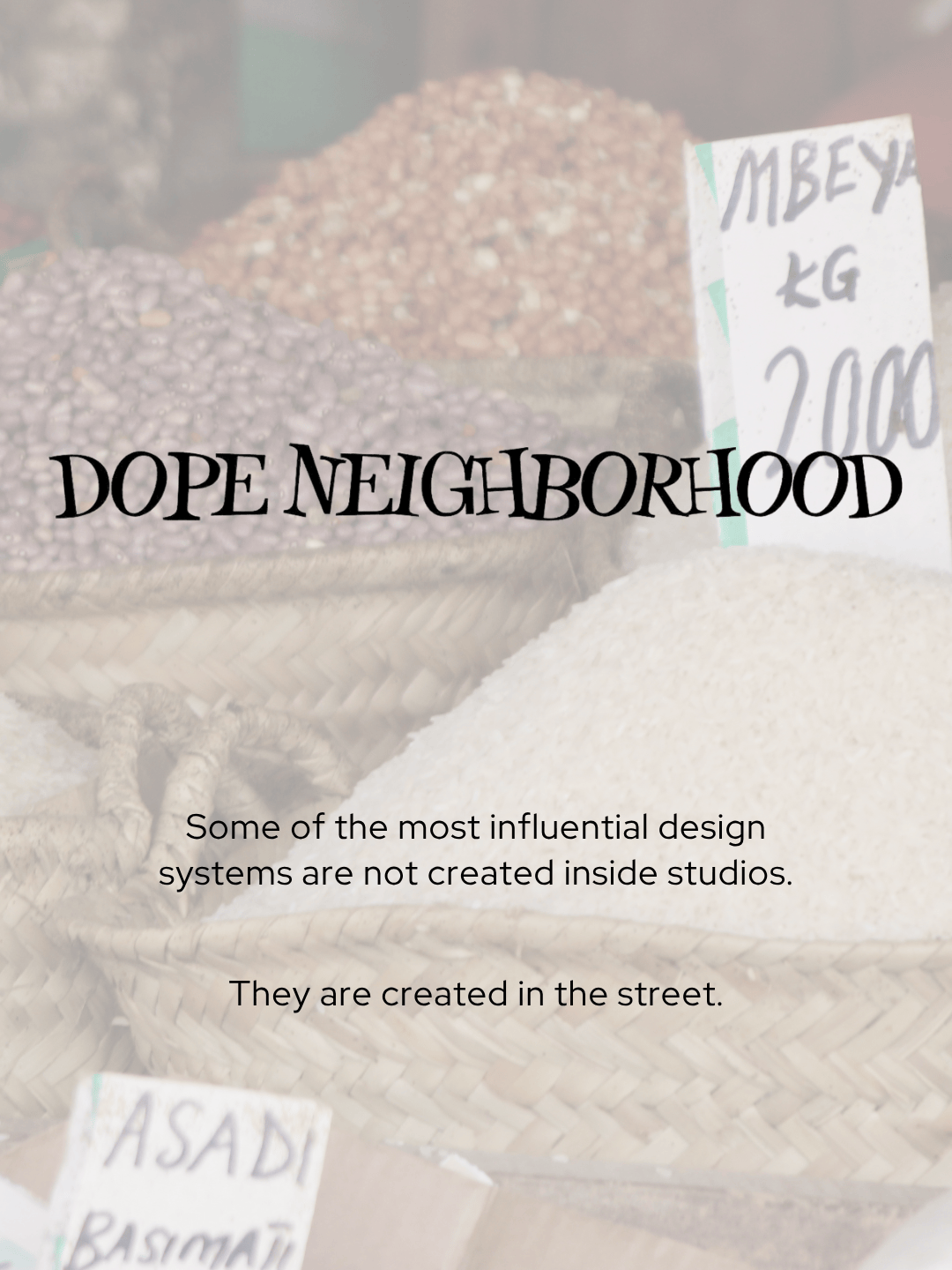
Across African streets, markets, kiosks, handwritten signs, stacked products, painted stalls, and improvised structures collectively create visual systems that influence how people navigate, remember, and experience urban life.
Typography becomes personality.
Color becomes navigation.
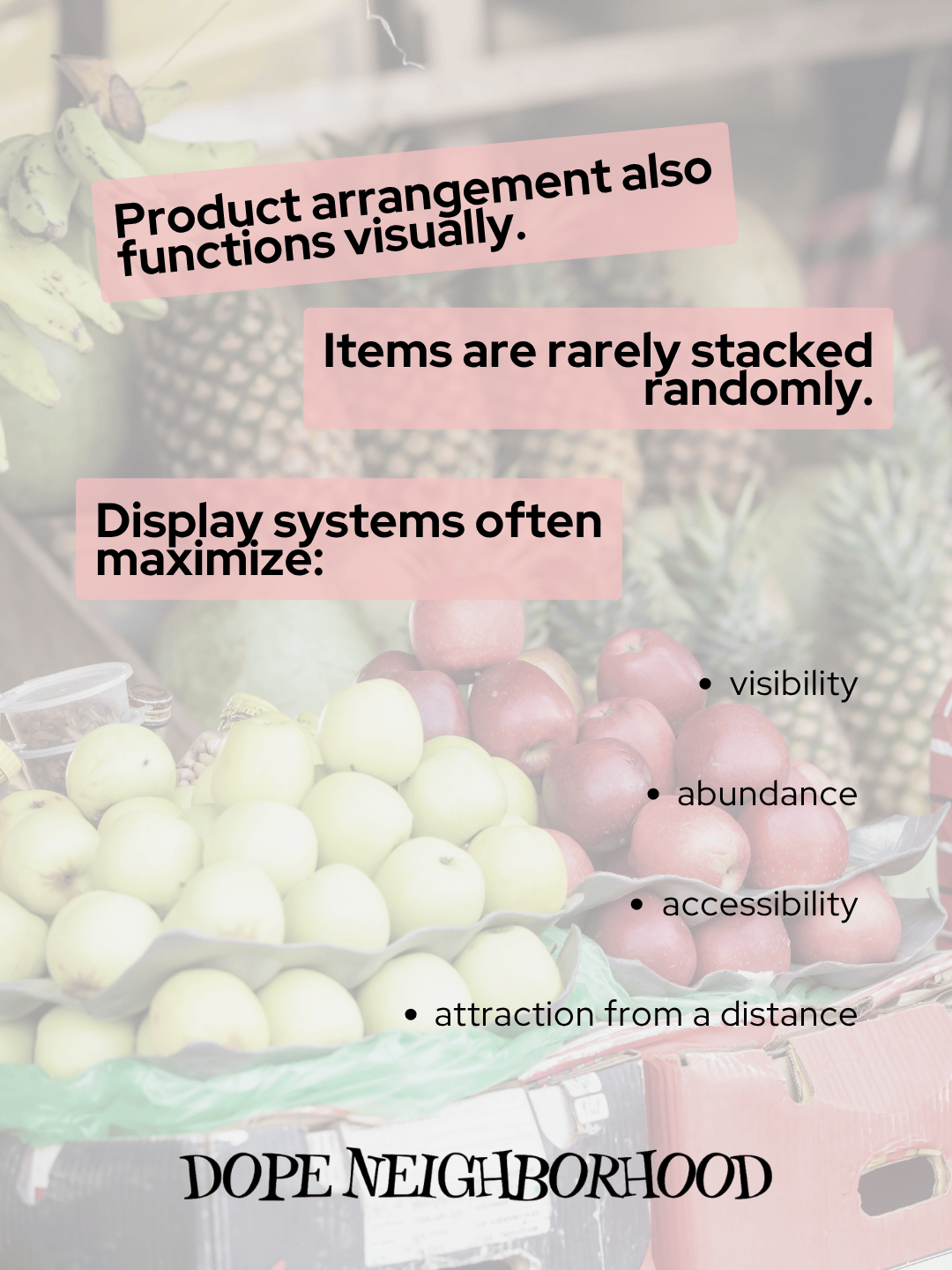
Arrangement becomes communication.
What may appear chaotic at first often contains sophisticated systems of visibility, rhythm, adaptation, and spatial intelligence developed outside formal design institutions.
This week, we explore how informal commerce creates its own visual language – and how some of the most influential urban aesthetics are authored directly in the street.
Leave a Reply